How AI Helps Optimize Net Profit Margin
In the present day, the business ecosystem is very competitive, and companies need to keep on improving their profits continuously if they want to remain in the race. AI uses organizations to make faster, more intelligent decisions, thereby enabling them to optimize net profit margins through data-driven strategies. AI is involved at every step, from advanced profitability analysis to entirely automated cost reduction, offering banks and corporations daily actionable insights to enhance their operational and financial performance. It is a powerful tool for increasing profits as it not only strengthens operational efficiency but also improves the customer experience, provides more accurate financial forecasting, and so on.
In addition, AI is a boon to businesses that are looking to automate their manual processes with intelligence instead of depending on humans, as the latter are always the weakest link in the workflow chain. This move not only eliminates devices’ inefficiencies but also puts leaders in a position to make timely decisions that keep cash flowing in faster, in larger volumes. Quick firms, whether through AI or otherwise, to sense and react to market changes will be the ones who end up with a better risk position and a higher number of profit opportunities in the data of the past. With AI as the main driver of growth, businesses can even soar amid economic downturns and maintain margins.
AI-Driven Profitability Analysis to Optimize Net Profit Margin
The identification of actual profit drivers, whether they be products or customers, is often a perplexing problem for companies. The analysis of profits powered by AI draws on large data sets. It processes them in just a few seconds, offering leaders insights that cannot be obtained through traditional spreadsheet methods. AI identifies the actual profit contribution of all revenue streams by integrating data from sales, supply chain costs, marketing spend, and customer behaviour. Readers of the whole script might be able to guess the keywords.
Artificial Intelligence performs a deeper analysis of the data by determining, for each customer segment, the true cost-to-serve, thereby gaining insights into buyer profitability. It uncovers whether the buyers are paying off or whether the company is losing money on them due to high service requirements or low loyalty. Moreover, it identifies the marketing efforts that deliver strong ROAS (Return on Advertising Spend) and those that do not.
Additionally, ML determines the optimal prices for each product category based on demand trends, market competitiveness, and appropriate profit constraints. With the help of AI, instead of offering universal discounts that eat into margins, smart pricing is adopted that preserves profits while remaining competitive.
The AI not only signals issues but also provides suggestions based on data on product bundling, category-wise pricing, upselling tactics, and churning-prevention campaigns. Companies are provided with simulations of pricing scenarios before they are implemented in the real world. By getting to the bottom of revenue leakage and identifying hidden growth areas, managers can make brave decisions that continuously optimize net profit margin rather than only periodically. This is a significant shift from the way more businesses have had to cope with time-based problem-solving to one of long-term profitability enhancement.
Automating Operational Cost Reduction to Optimize Net Profit Margin
Every rupee saved through cost reduction directly increases net profit. AI is the primary tool that helps eliminate avoidable costs through automation and continuous monitoring. Robotic Process Automation (RPA) is among the technologies that speed up administrative tasks, thus lightening payroll burden and minimizing human error. Predictive Maintenance, a technique for monitoring equipment condition, not only prevents downtime but also increases the overall lifespan of assets and reduces repair expenses.
AI-based energy management systems can slash electricity bills and reduce waste by analyzing facility usage patterns to identify the causes of unnecessary energy consumption. In logistics, AI also plays a significant role in improving route planning and load optimization, thereby reducing transportation fuel costs and delivery delays, both of which are severe drains on the business’s revenues.
Moreover, AI can unearth inefficient spending habits, such as fuel overconsumption, excessive time spent processing, or unused software subscriptions. Intelligent procurement systems closely monitor supplier performance, negotiation success, and cost differences to ensure the best commercial decisions are made. This prevents overpayments or inventory stocking that subsequently becomes dead stock.
AI is the driving force behind workforce planning tools that assign shift resources exactly where they are needed, reducing overtime costs while maintaining productivity. All these efficiency gains together strengthen the bottom line by eliminating operational waste and maximizing output per resource. By making resource use more efficient and eliminating operational fatigue, organizations can significantly optimize net profit margins through long-term savings across the value chain and achieve non-scaling financial success.
Using AI to Improve Business Efficiency to Optimize Net Profit Margins
Greater business efficiency translates into quicker results using fewer resources. This is a massive plus for the margin of profits. AI makes the operation more efficient by assigning tasks correctly, prioritizing the important ones first, and reducing decision-making delays. Employees are less occupied with routine tasks and more with creative, customer-satisfying activities because automation is taking over the tedious parts of the job.
The payment options and technology trends under discussion have also demonstrated their role as a partner in progress by identifying weak spots and helping teams redesign operations before losses occur. Real-time dashboards can identify productivity gaps and provide insights to improve staff performance. Digital assistants powered by AI can help employees instantly answer questions, report, and retrieve knowledge in a structured way, thereby reducing reliance on manual research.
Additionally, it is the technology that facilitates communication within departments by providing variable data visibility, ensuring that a lack of information does not hold up any project. The intelligent scheduling software is improving workforce performance while eliminating the need for overtime. The AI-controlled quality assurance system detects errors early in production or service delivery, thereby minimizing the costs of redoing work and customer complaints.
The improvements mentioned above are the sources of quicker turnarounds, higher service quality, and ultimately more satisfied customers, all of which are very important factors in making a profit. All that has happened is the creation of a high-productivity business ecosystem that consistently delivers the same results, allowing firms to optimize net profit margins as they enhance service quality, scalability, and production performance.
AI-Powered Financial Forecasting to Optimize Net Profit Margin
The older ways of predicting financial outcomes have relied chiefly on historical data, while AI models adapt to new trends. AI can foresee scenarios that could affect profits, such as seasonal buying patterns, supply chain risks, competitors’ price shifts, and even economic factors. The forecasting by the AI allows the finance teams to allocate the budgets more effectively by preparing them for the upcoming issues and doing it beforehand.
AI is improving the accuracy of sales forecasting at the level of each product type (SKU), region, and channel, eliminating stockouts – the situation where available goods are not enough to meet demand – and providing revenue opportunities while avoiding oversaturation of stock that constrains working capital. AI runs different scenarios like inflation, price sensitivity, and changes in suppliers to excel in cost planning and negotiations of contracts.
The executives can create scenarios: “What will be the financial impact if the demand shifts down by 10%?” The companies can then test price changes, resource cuts, or new product releases in these scenarios before committing to a budget. Besides, AI monitors fraud indicators and credit risks, thereby helping prevent sales losses.
More accurate predictions lead to more controlled cash flow management, faster investments, and fewer financial disruptions. Rather than getting caught up in market shifts beyond their control, companies can become visionaries by repositioning their strategies to remain profitable. AI has thus enabled companies to experience fewer revenue surprises and more stable cash flow, which, in turn, supports profitability and allows businesses to optimize net profit margin through greater confidence and future-proof planning.
AI-Driven Supply Chain Optimization to Optimize Net Profit Margin
One of the main reasons that customer loyalty contributes to company profits is that AI provides personalized experiences, boosting customer engagement and satisfaction. Using predictive behaviour analytics, AI determines the next best thing for the customer — it could be a product suggestion, a discount offer, or improved service support. This not only increases the average order size but also raises the value of the customer over the whole period of the relationship with the company, which are the two main drivers to optimize net profit margin.
Chatbots and digital assistants handle a large share of routine customer service inquiries instantly, thereby reducing customer service costs significantly and improving business efficiency. AI sentiment analysis, on its part, also tracks customer feedback on social media, via email, and through reviews, analyzing the tone of the messages. Therefore, it helps companies preempt dissatisfaction that could lead to customer loss by addressing the issue in time.
In marketing, AI automates the manual campaign segmentation process and directs high-value buyers to personalized messages, thereby increasing ROI while reducing ad waste. Intelligent loyalty schemes reward customers for actions that are profitable for the company, rather than just based on customer frequency, thus only the right segments receive the benefits.
By enhancing service quality and cost control in customer-facing operations, AI has turned every interaction into a profit opportunity. Suppose happy customers don’t just stay longer but also spend more and tell others about the brand. In that case, companies can grow revenue without a proportionate increase in costs and continuously optimize net profit margin.
AI for Fraud Detection and Loss Prevention to Optimize Net Profit Margin
Fraud and operational leakages silently damage earnings. AI protects profits by continuously monitoring data for suspicious behaviours and anomalies. Machine learning models analyze purchasing records, billing information, transaction logs, and employee activities to identify patterns that signal the potential for fraud — very early in the process, before any financial loss occurs.
The risk alerts have been classified as high, giving companies the chance to do the right thing quickly and thus protect income. AI fraud prevention tools also safeguard customer data, reducing legal liabilities and cybersecurity costs. In the retail and manufacturing sectors, camera vision can instantly detect theft at the store or by employees, thereby substantially reducing shrinkage.
Moreover, artificial intelligence mandates compliance checks, leading to lower fines and halting losses from regulatory breaches. It also confirms billing accuracy and prevents duplicate payments or excessive charges.
As fraudulent approaches keep changing, AI models are constantly learning and thus become stronger at defending security systems. This proactive approach ensures preventable financial leaks don’t erode revenue. By avoiding every risk, companies effectively optimize net profit margins while maintaining secure, trustworthy business operations.
AI-Backed Strategic Decision-Making to Optimize Net Profit Margin
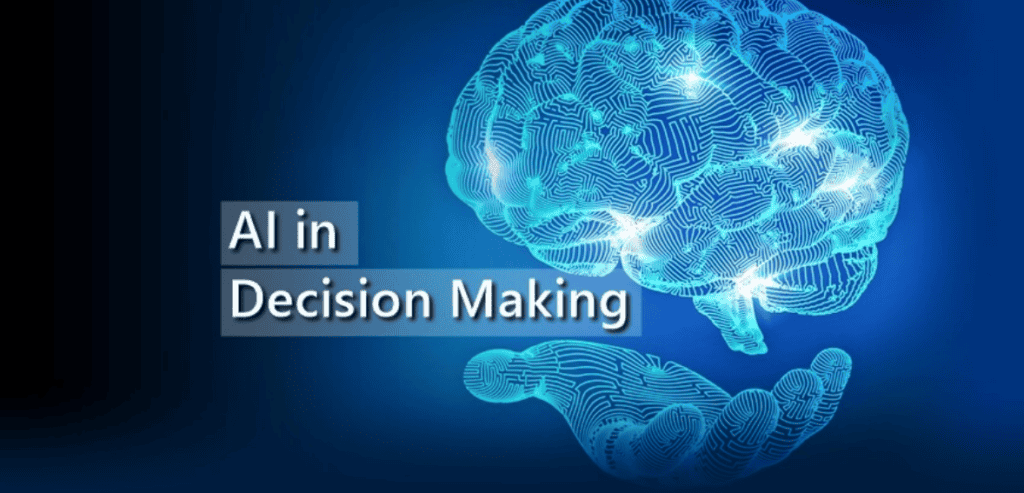
Profit-led decision-making requires clean, real-time data insights — and AI delivers precisely that. AI-driven dashboards integrate finance, operations, marketing, and customer data into a unified performance view, so leaders can instantly see what’s driving profit and what’s hurting it.
Predictive simulations analyze multiple business situations simultaneously, allowing top management to select the strategy with the most significant impact to optimize net profit margins. Furthermore, automated decision-making tools propose the best actions based on revenue forecasts, cost models, and risk analysis.
Moreover, AI aligns organizational priorities by identifying the most value-creating tasks. Thus, teams are not allowed to spend their efforts on low-impact initiatives. Instead, it has been directing capital to the right projects and at the right time, leading to higher returns for every dollar spent.
In this way, business leaders are no longer dependent on intuition or older reports, but instead receive quicker, more brilliant insights. This enables confident financial governance, eliminates uncertainty, and accelerates profitable growth. With AI playing a strategic advisory role, organizations can sustainably and measurably optimize net profit margins.
Conclusion
Transforming business AIs, saving time, and unlocking cost-effective growth are among the benefits of using Artificial Intelligence in businesses. AI strengthens the bottom line through advanced profitability analysis, innovative cost-reduction measures, improved business efficiency, and high-accuracy financial forecasting, thereby impacting every operational angle. Businesses no longer have to rely on intuition when it comes to actions that increase profits. AI makes it all clear, provides the means, and delivers future predictions in one environment.
Furthermore, the long-term benefits of AI include strengthened customer ties, fraud detection, and greater operational resilience. It ushers in a new era of instantaneous improvement, where every decision is based on real-time data and performance continually improves. To optimize net profit margin, the use of AI is no longer an option but a strategic imperative for achieving sustainable financial excellence and outpacing competitors in the digital era. Companies that adopt these technologies today will eventually become the leaders in their respective industries tomorrow.
FAQs
How does AI support organizations in the process of optimizing net profit margin?
The incorporation of AI into organizations enhances profits by automating routine activities, thereby reducing operational costs. AI inputs in decision-making ensure the organization’s financial health remains the primary focus.
Is AI the only tool that large companies can use?
Definitely not, small and medium-sized enterprises reap the benefits of AI to a great extent. The use of budget-friendly AI applications in accounting, marketing, and inventory management enables SMEs to raise their profit margins without hiring extra staff or increasing costs.
Will the pairing of AI with organizations’ human resource functions yield labour cost savings?
Indeed, by automating repetitive tasks, AI allows employees to concentrate more on critical projects. As a result, there is less need for overtime, productivity increases, and workers are more profitable because their efforts are directed towards the company’s objectives.
What is the role of AI in improving the accuracy of financial forecasting?
The AI systems are trained to recognize patterns in current data, emerging market trends, and customer preferences, enabling the organization to produce highly accurate estimates of revenue and expenses. The organization also acts on the given forecast, enabling the timely implementation of growth strategies and minimizing financial surprises.
Does implementing AI have a quick ROI?
Most companies see fast returns, especially where automation removes inefficiencies or prevents losses. Profits rise when AI optimizes operations and increases revenue without raising operational expenses.